SEISA needed more than a better-looking website. It needed a digital system capable of communicating technical credibility to medical-device buyers, partners, and evaluators.
SEISA Medical operates in a high-trust manufacturing environment where visibility alone is not enough. The company needed clearer service architecture, stronger search performance, and content that could translate operational capability into language the market could actually understand.
That required an integrated mix of Market Intelligence, SEO & GEO, and Content Production so the site could support both discoverability and technical trust.
Working through Growth, the engagement rebuilt the web foundation around audience clarity, search intent, and authority signals so the site could support both discovery and commercial confidence.
The issue was not only traffic,
it was trust at first impression.
SEISA's digital presence was too thin for the level of sophistication behind the company. Search visibility was limited, the website structure was underdeveloped, and the content did not reflect the full scope of its capabilities across Class I, II, and III medical-device manufacturing support.
That created a commercial risk: even when qualified visitors reached the site, the platform was not doing enough to establish authority, clarify services, or move buyers toward a productive next step.
Start with audience clarity,
then build the content system around it.
NDA began by mapping the business, market segments, and competitive landscape. From there, the engagement focused on information architecture, service-by-service keyword alignment, and content development designed to position SEISA as a knowledgeable manufacturing partner rather than a generic vendor.
The site itself was strengthened at both messaging and usability layers so visitors could navigate the platform more easily, evaluate services more clearly, and interpret the company with more confidence.
Show the before, the rebuild,
and the search-facing structure.
-
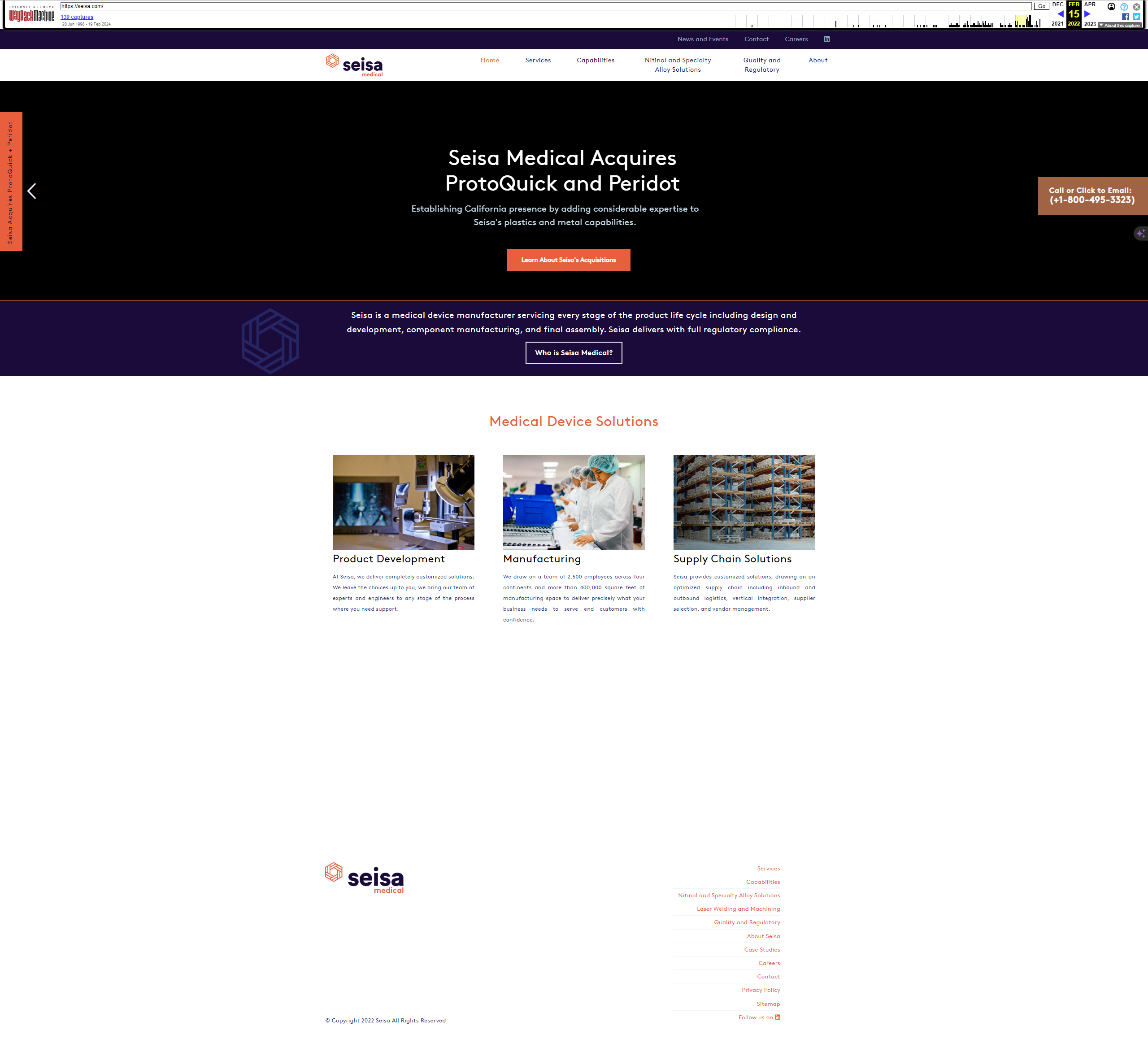
The original one-page presence undersold the company’s actual manufacturing sophistication. -
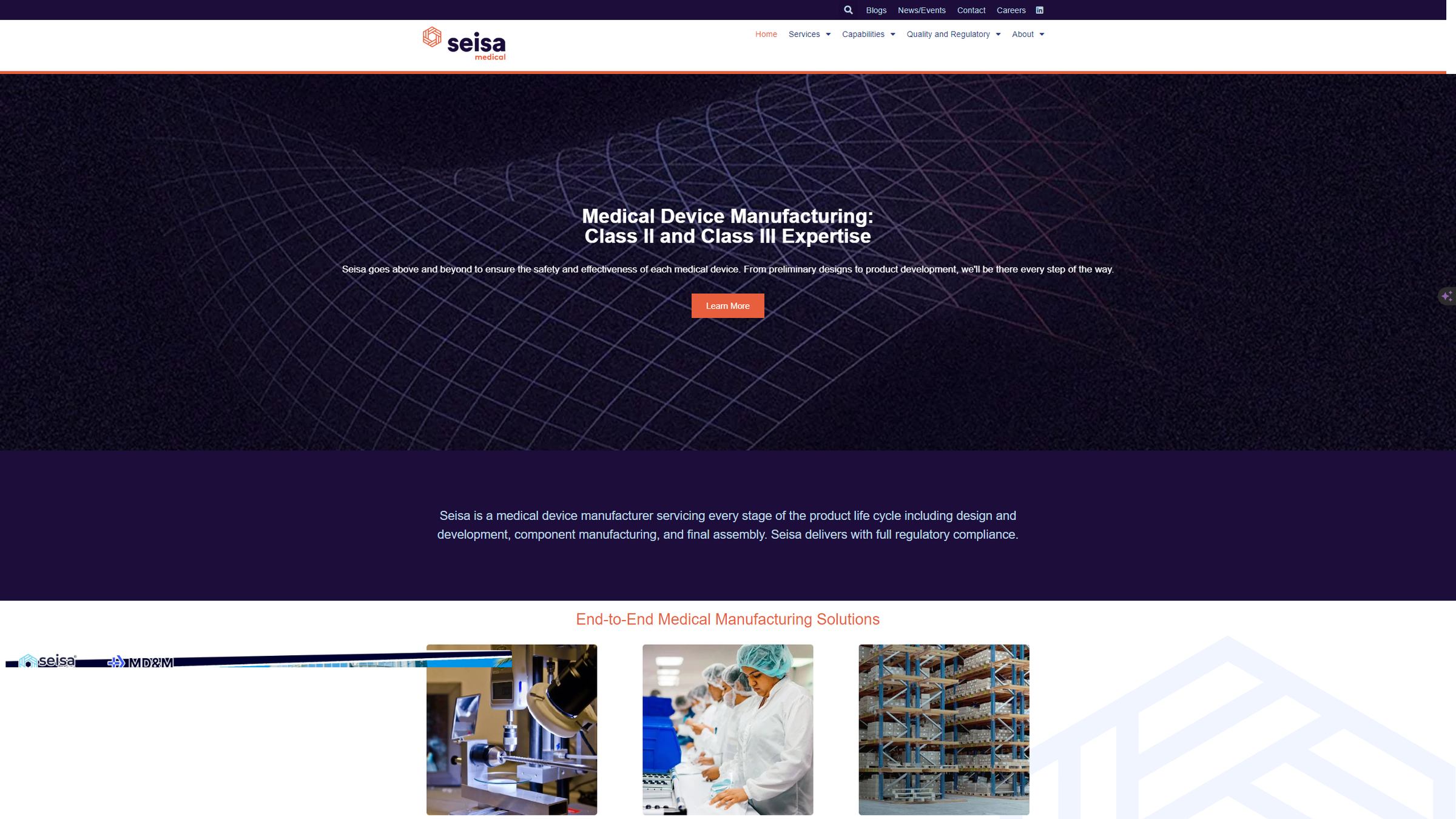
The rebuilt homepage introduced a clearer service narrative and a more credible first impression. -
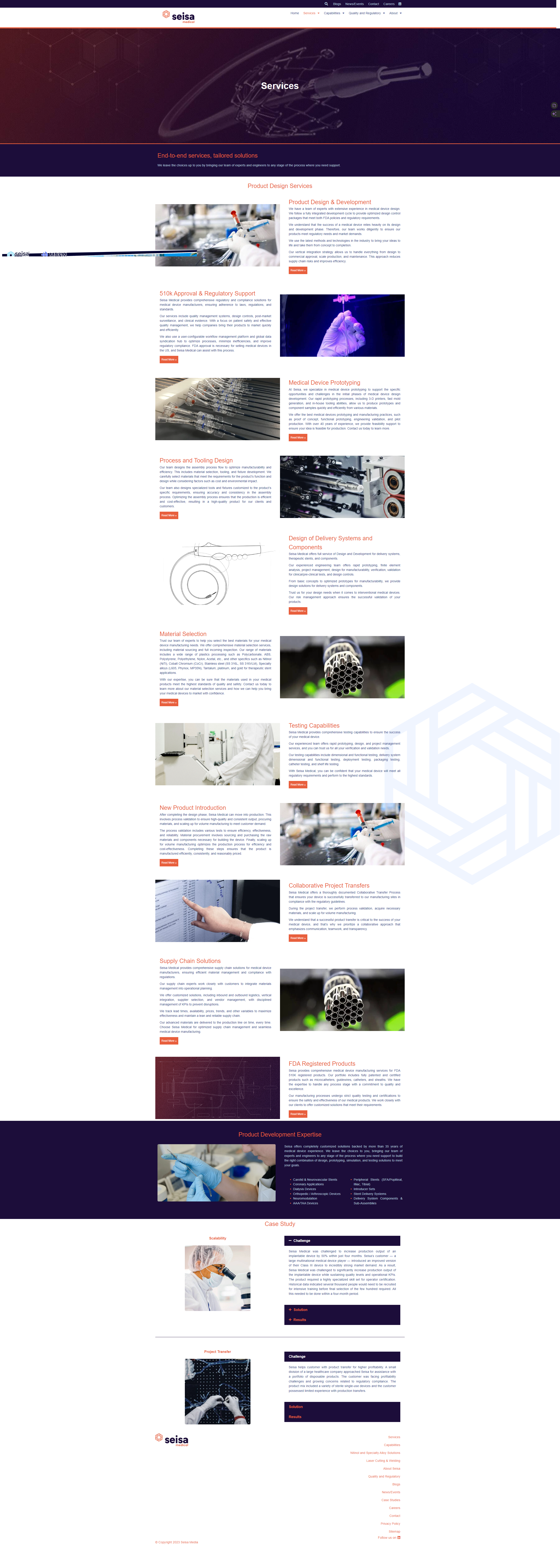
Service architecture was expanded so regulated buyers could evaluate capabilities with less friction.
Slide 1 of 3
A stronger digital foundation
for visibility, credibility, and conversion.
Use metrics where they explain the story,
not as random screenshot filler.
-
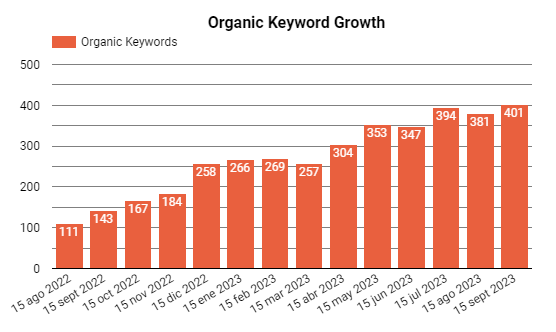
Keyword growth validated that the new information architecture and SEO targeting were expanding discoverability. -
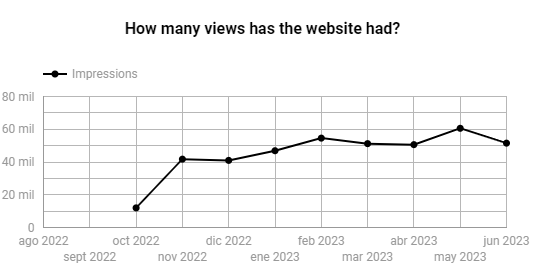
Impression growth showed the rebuilt content system was earning more search exposure over time. -
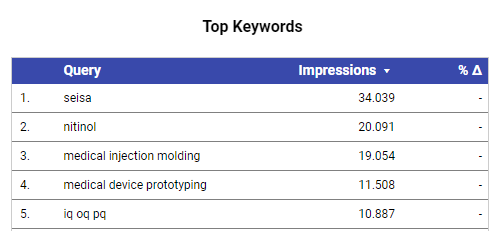
Ranking gains across target terms reinforced SEISA’s positioning as a more visible manufacturing authority.
Slide 1 of 3