Trainlight was built to solve a stubborn manufacturing problem: training takes too long, costs too much, and is hard to standardize across changing environments, devices, and workstations.
NDA developed Trainlight as a no-code immersive training platform that uses augmented reality and mixed reality to make industrial training faster, more flexible, and easier to operate internally. The product story centered on clear operational value: less ramp time, lower training cost, stronger retention, and more autonomy for the teams running training.
What pushed the case further was the public proof around it. Trainlight was selected into The Bridge Accelerator, earned visibility through the program, and then gained third-party coverage from T-HUB. That gave the product more than a technical narrative. It gave it market validation.
Make immersive training feel usable for manufacturers,
not experimental.
Industrial buyers do not buy XR because it looks advanced. They buy when it helps reduce onboarding time, support workforce consistency, and lower the friction of training delivery. That meant Trainlight had to be positioned as a practical manufacturing platform, not just as a flashy AR or MR demo.
The story also had to do several things at once: explain the no-code angle, show compatibility across technologies, establish the SaaS model, and make clear why immersive training belongs inside real manufacturing operations. Without that clarity, even a strong product can get dismissed as interesting but not deployable.
Show the product.
Then surround it with market proof.
NDA built the launch story around the product demo first. The platform had to show its value in concrete terms: reduce training time by up to 70 percent, improve retention, and let companies manage training programs without technical teams rebuilding each workflow from scratch.
From there, the strategy widened. The Bridge Accelerator win became proof of external traction, while the T-HUB coverage helped validate the product through an outside voice. That combination matters because product trust rarely comes from one asset alone. It comes from product evidence, ecosystem evidence, and third-party evidence working together. The broader framing is also supported by the insight on [industrial VR, AR, and MR systems for training and communication](/insights/industrial-vr-ar-mr-training-communication/).
This is also where the case connects directly to Augmented Reality and Mixed Reality. Trainlight was not positioned as generic innovation. It was framed as an operating product built from those capabilities for manufacturing teams that care about speed, retention, and autonomy.
The event photos matter because they show
Trainlight moving from product idea into ecosystem visibility.
-
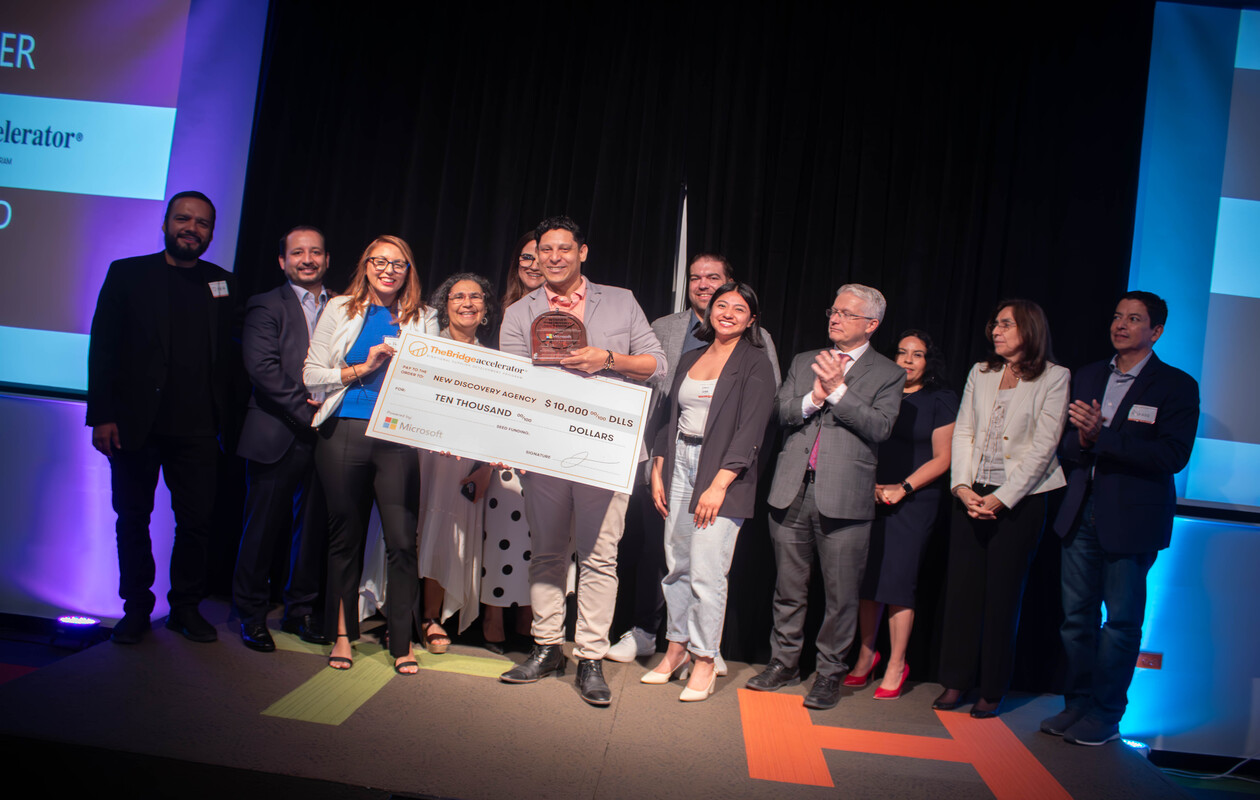
The core event images matter because they show the product positioned in a real accelerator context, not in isolation. -
Stage moments helped turn the Trainlight story into something legible for buyers, partners, and regional stakeholders. -
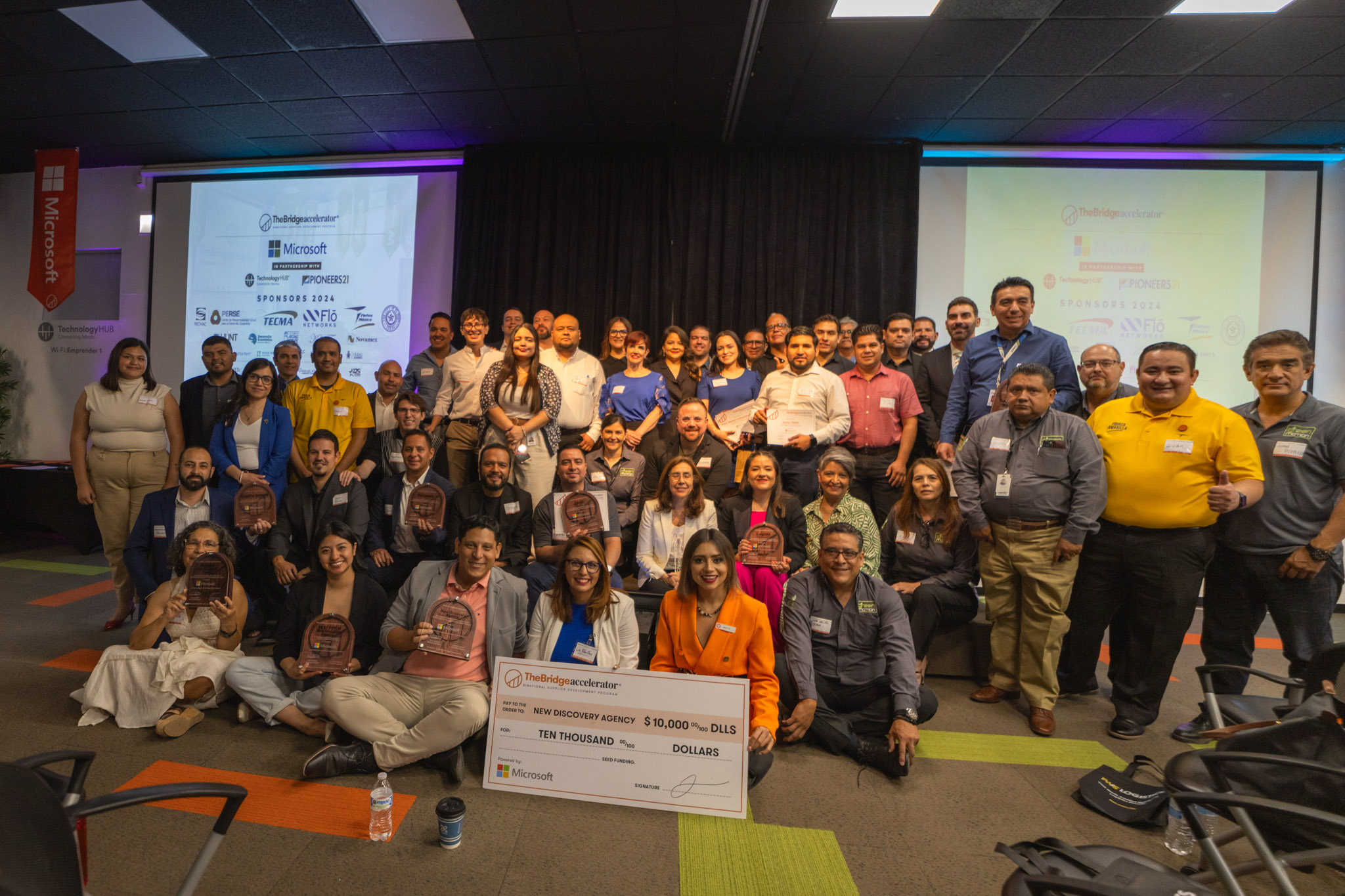
Cohort imagery places the product inside a broader binational innovation ecosystem, which strengthens credibility beyond the demo itself. -
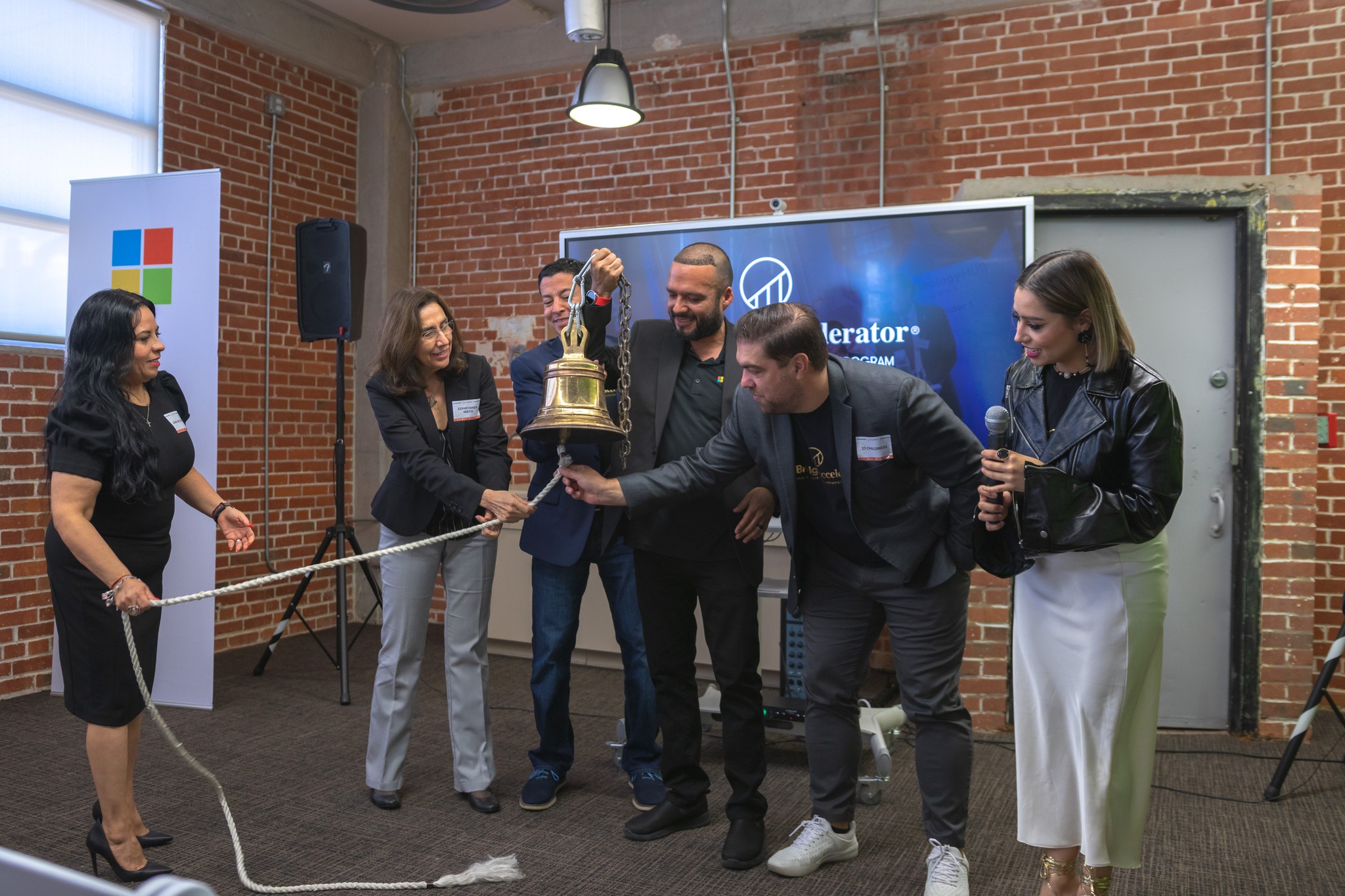
Kickoff documentation helps tell the longer story: Trainlight was not a one-day appearance, but part of a structured accelerator journey. -
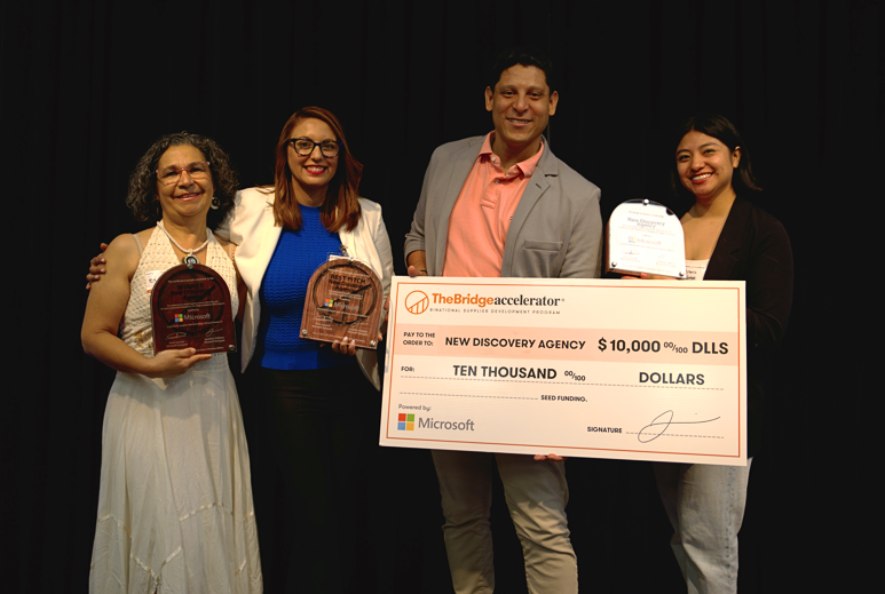
Team-side frames make the founder and operator energy visible, which matters in early-stage product narratives. -
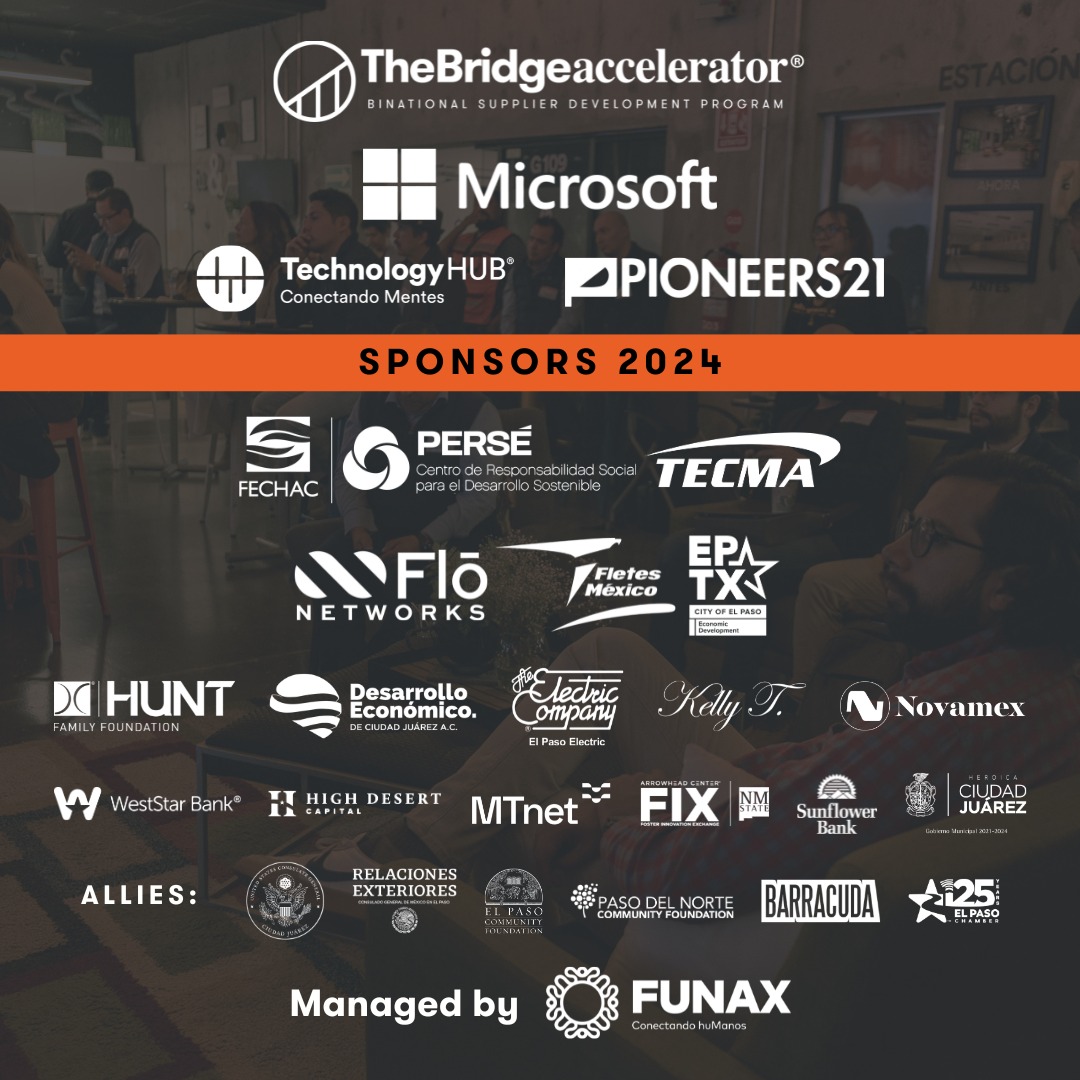
Program and sponsor presence signal that Trainlight was being evaluated in a serious business environment, not just a technology showcase.
Slide 1 of 6
A stronger launch narrative,
backed by product, press, and program proof.
The strongest outcome was narrative clarity. Trainlight could now be understood as a serious industrial training product with a concrete economic story, not simply as an XR experiment. The demo, the accelerator recognition, the press, and the event recap all reinforced the same position from different angles.
That is what made the launch more credible. Manufacturers could see the product, understand the operating model, and locate it within a larger ecosystem of buyers, partners, and regional innovation efforts.
What this engagement reveals
about Innovation.
Innovation can turn immersive technology into a product story that buyers can actually evaluate. This case shows platform design, XR positioning, demo logic, and ecosystem proof working together instead of existing as separate marketing fragments.
That matters for tech products aimed at industrial markets. The technical capability alone is rarely enough. The market needs a narrative that makes deployment, value, and credibility easy to grasp.