Liz Pasillas was elected president of the Specialised Software Development Section of CANACO Ciudad Juárez and took office in the first weeks of 2025.
What she said the job is for: pushing innovation and strengthening digital transformation among local companies, so software is treated as a pillar of the region's technological progress rather than a service anyone buys last.
The team she named around her is Memo Asiain, Daniel Ayala, Alberto Valero Ortega, Rafael Rucobo Cruz, Jonalex Herrera, Iván Eduardo Muñiz Hernández and Eduardo Ramos Morán, with Mariana Ramírez, Omar Saucedo, Rodolfo Vázquez, Agustine Pimentel, Orlando Daniel and Ricardo Mora advising. "I am only the voice of this new team that represents Juárez," she wrote.
It started as a coffee and turned into a mandate.
Her own account traces the section back to the Smart Tech Alliance, the group of local software companies that had been meeting for years, and to a strategy meeting in December 2024. Through 2025 the section became the platform for the work that followed: the meetings with federal and municipal officials in April, and the first AI forum for small and mid-sized businesses, which the section organised with Microsoft in September.
The plan is a calendar, not a manifesto.
The work plan the section adopted for 2025 sets five objectives — get the region's software companies collaborating, get software adopted across every other business sector, strengthen members' technical and commercial skills, build alliances with CANACO's other specialised sections, and position the industry as an engine of the local economy — and then turns them into a calendar. Structure and internal rules first, then a monthly programme of educational talks running ten months, a directory of member companies and what each one actually does, a networking event with the other sections, and alliances with universities to keep talent in the city.
Two items are more unusual than the rest. A reverse show, where local companies present their problems and the section proposes technology to solve them, inverting the usual vendor pitch. And a binational alliance with a software association on the other side of the border, which is the point of being in Ciudad Juárez at all. What members get in return is stated plainly: connections, monthly training, a platform to be seen by the rest of CANACO, one voice in front of the authorities, and somewhere to trade practice.
-
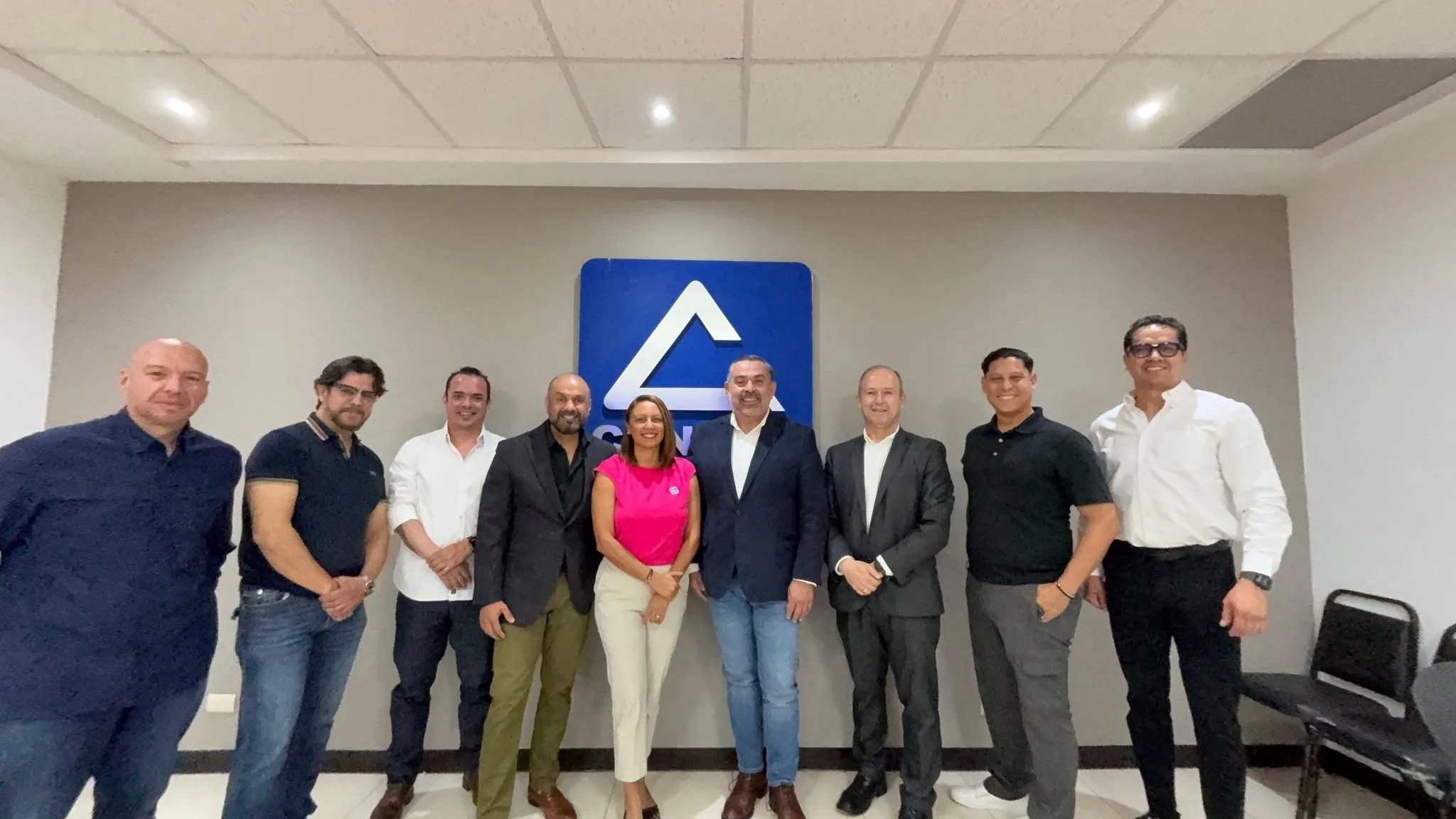
The specialised software development section at CANACO Ciudad Juárez, 2025. -
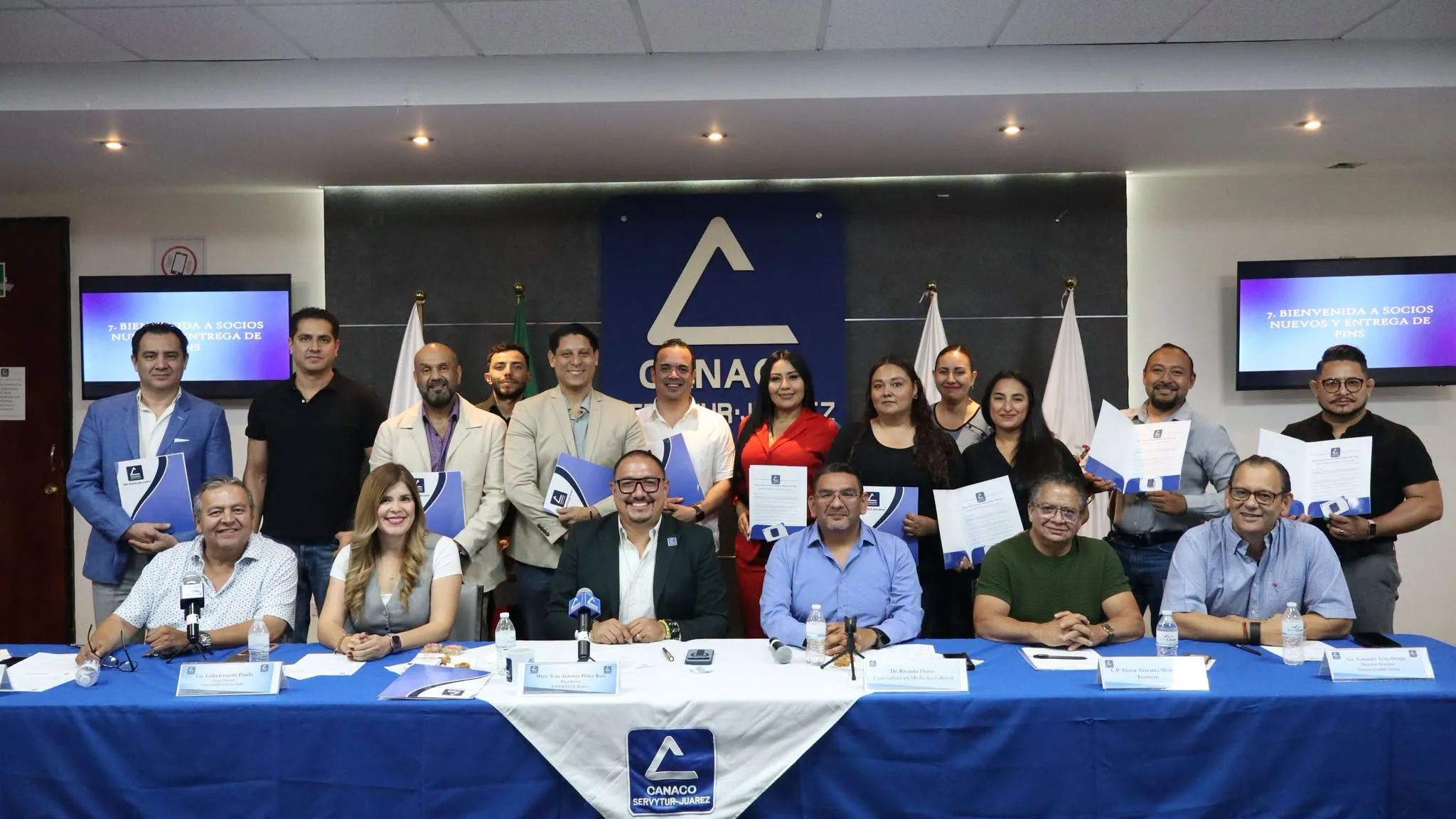
A CANACO Servytur Juárez session, with the chamber's board and new members.
Slide 1 of 2