Juarez Aumentada began as a cultural AR system designed to make local history easier to encounter, explore, and teach through contemporary interfaces rather than static reference formats alone.
NDA built the first phase around the capture of 40 monuments and 20 historic centres in Ciudad Juarez, translating them into an interactive educational layer for mobile exploration. That original scope created a usable public interface for heritage, not just a digital archive.
Over time, the project expanded into a broader civic-history system documenting about 60 heritage sites — 40 monuments and 20 historic centres (Noro, Norte Digital) — and ultimately evolved into a permanent kiosk installation at La Rodadora Museo Interactivo. That progression matters because it shows the work surviving beyond launch and becoming part of a standing public exhibition.
Preserve local memory.
Make people interact with it.
The problem was not simply documenting cultural sites. Ciudad Juarez needed a more engaging way to connect residents, students, and visitors with monuments, commemorative plaques, and historical spaces that often remain invisible in daily life.
A static informational layer would have preserved facts without changing behavior. The system needed enough clarity and technical stability to support learning in the field, while also remaining adaptable for institutional use in a museum environment.
Capture the city first.
Then build for repeatable public use.
Innovation structured the project as a real operating system for civic storytelling. The first phase focused on volumetric capture, content structuring, and mobile experience design across the initial set of monuments, plaques, and historic buildings. Support from BRP and the EKA Naweame program helped create institutional backing, but the technical challenge remained in the product itself: the work had to feel educational, accessible, and durable.
That operating logic made it possible to extend Juarez Aumentada beyond a launch moment. Instead of rebuilding from scratch, the platform could be adapted into a museum-facing kiosk experience that gave the project a longer life inside La Rodadora. The broader deployment lesson is explored in [Augmented reality as civic infrastructure](/insights/augmented-reality-civic-infrastructure/), where this case functions as the concrete implementation example.
The platform mattered because it moved
from capture to public interface.
-
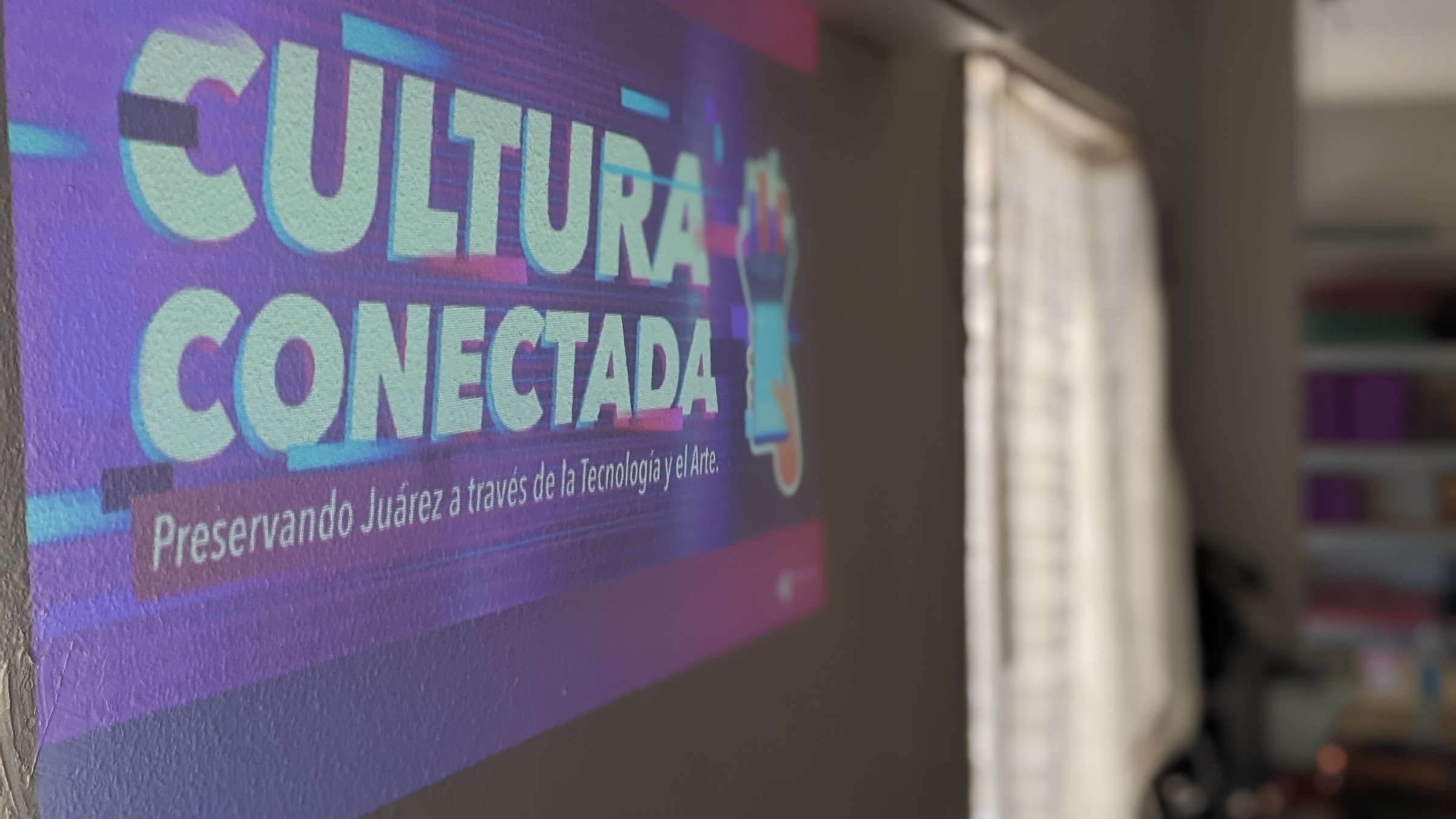
The Cultura Conectada presentation frame shows the work grounded in a real civic-learning context instead of existing only as a speculative technology concept. -
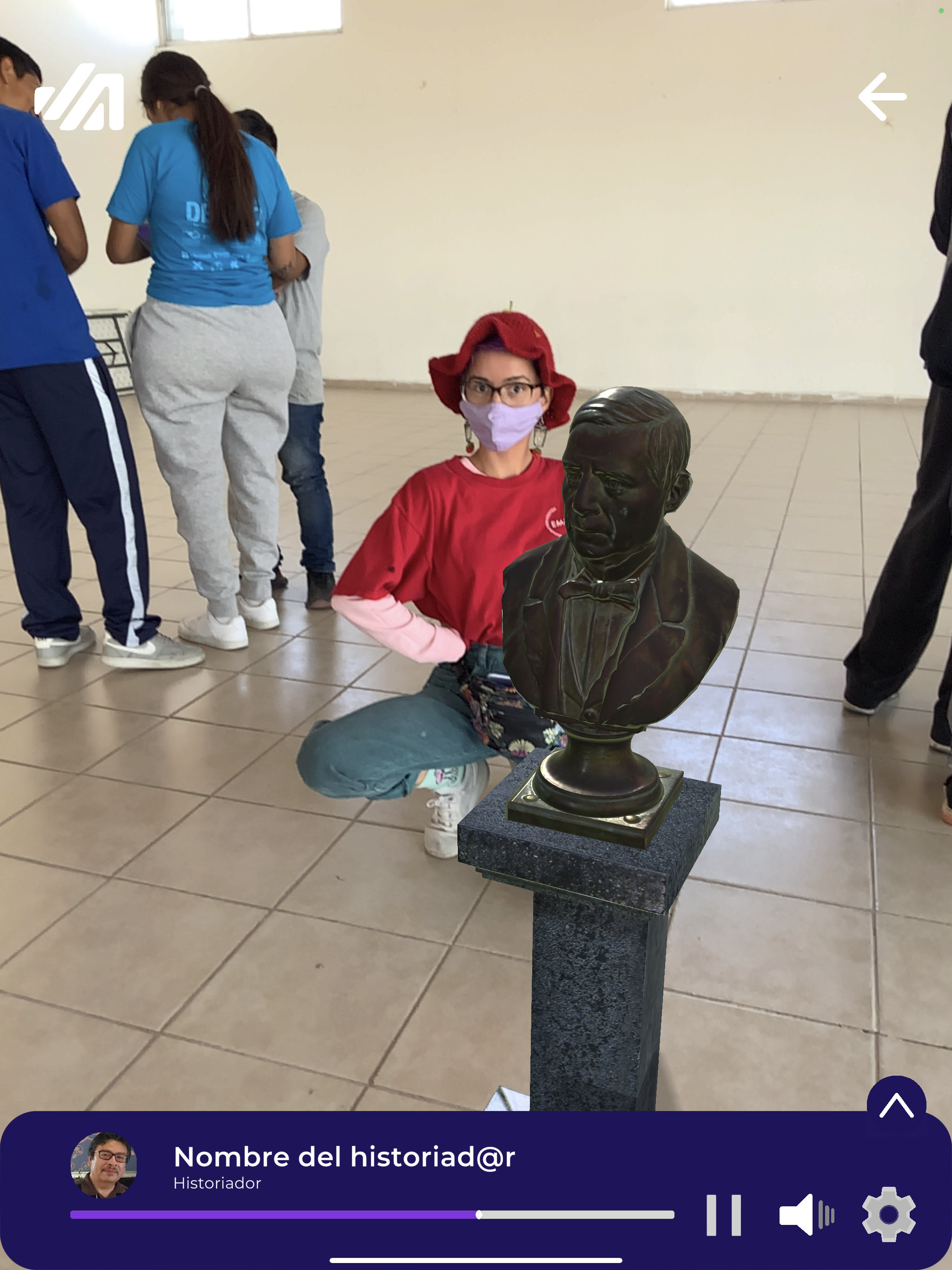
The monument overlay demonstrates how public sculpture was translated into an interactive educational object people could actually explore. -
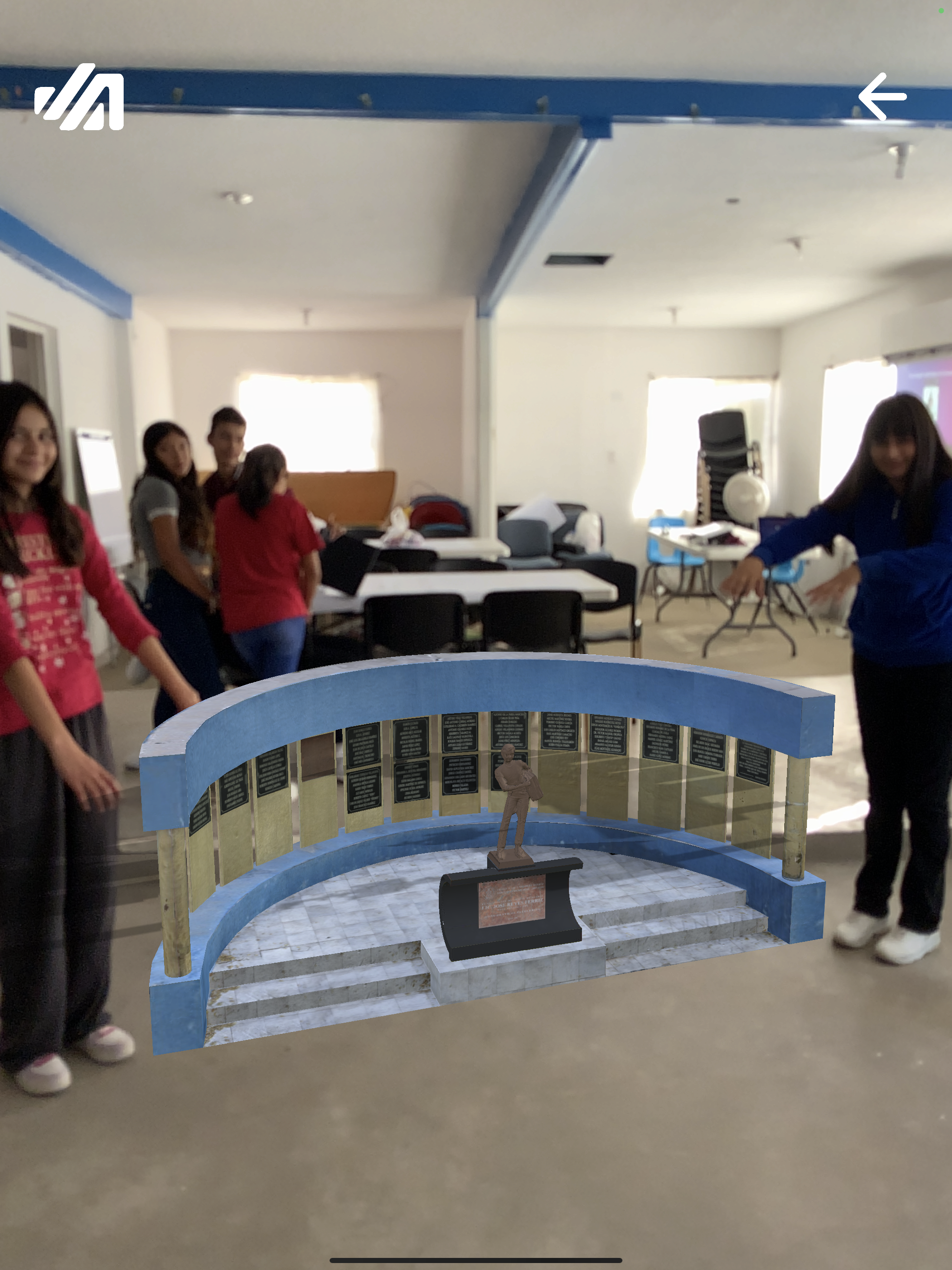
The memorial reconstruction makes the broader ambition clearer: this was not a one-object demo, but a system for presenting urban memory through immersive interaction.
Slide 1 of 3
The public record now extends
beyond the original launch.
A cultural technology project
that kept compounding in public.
The strongest signal in this case is not novelty. It is continuity. Juarez Aumentada proved that immersive technology can function as civic infrastructure when it is designed to survive beyond a launch campaign.
The project moved from field capture to public education, from recognition and partner support to a permanent exhibition presence. That is a stronger outcome than a one-time AR activation because it demonstrates cultural durability.
What this engagement reveals
about Innovation.
This case shows Innovation operating beyond commercial demo work. The team combined immersive production, content system design, and public-facing deployment into a format capable of serving culture, education, and exhibition goals at the same time.
That is the real capability signal: not AR as spectacle, but immersive technology translated into a lasting public experience.